
-
muhammadamjadbutt00@gmail.com
- February 28, 2026
- 0 Comments
- blog
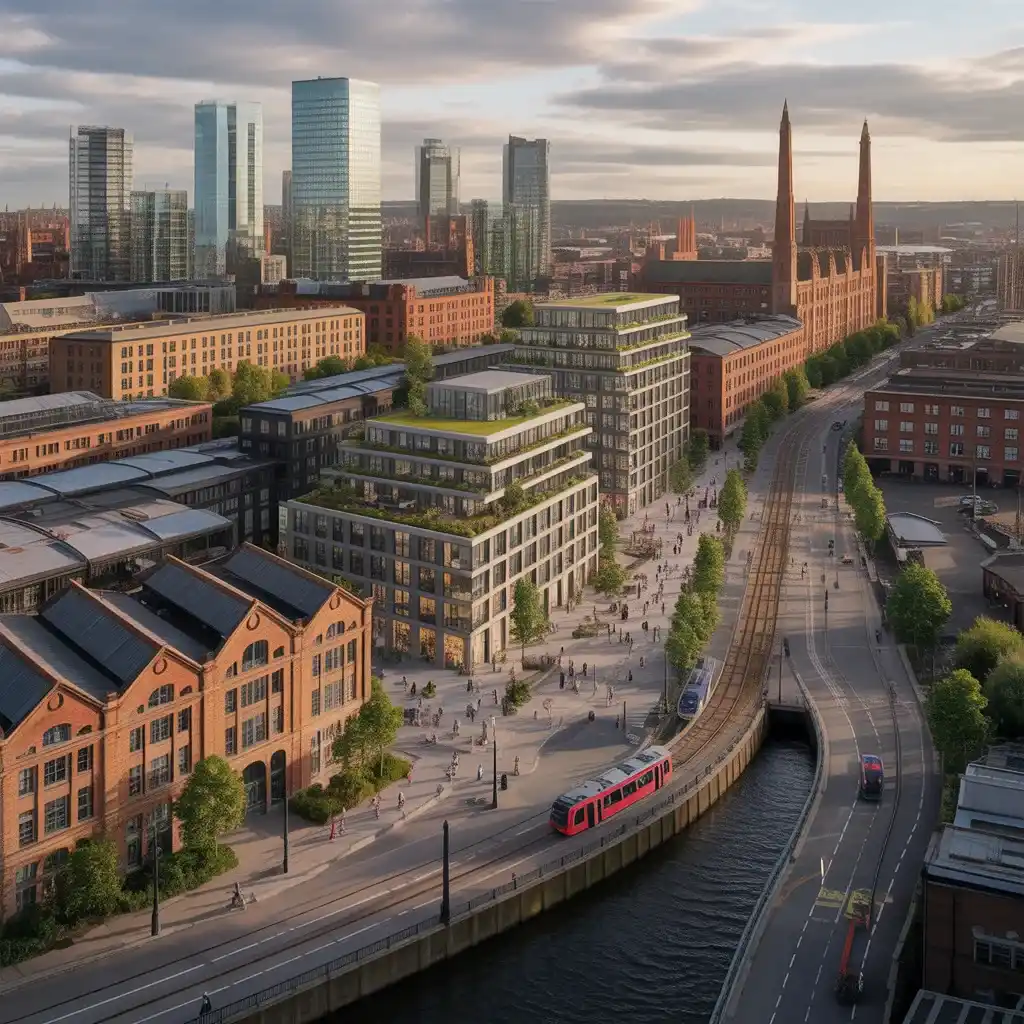
Urban regeneration companies (URCs) sit at the heart of one of the UK’s most ambitious attempts to breathe fresh life into faded industrial districts, neglected waterfronts, and struggling town centres. Established as specialist private vehicles backed by public vision, these organisations don’t just patch up broken streets they orchestrate radical, large-scale physical and economic overhauls that attract billions in private investment while aiming to improve lives for local communities.
If you’ve ever wondered why parts of Manchester, Liverpool or Glasgow suddenly boast shiny new apartments, creative hubs and thriving public spaces while older districts once felt forgotten, the answer often traces back to the strategic work of urban regeneration companies. In 2026, with levelling-up agendas, net-zero targets and housing shortages still dominating headlines, these entities remain more relevant than ever.
Understanding Urban Regeneration: The Bigger Picture
Urban regeneration is the deliberate, coordinated process of reversing decline in towns and cities. It tackles derelict land, outdated infrastructure, social deprivation and economic stagnation through targeted investment in housing, transport, green spaces, jobs and community facilities.
Unlike simple repairs or one-off developments, true regeneration is holistic. It blends physical renewal (new buildings, cleaned-up riversides) with social improvements (better schools, health services, reduced crime) and environmental gains (parks, sustainable drainage, lower emissions). In the UK context, it emerged as a response to the painful de-industrialisation of the 1970s–1990s, when shipyards closed, factories fell silent and populations drifted away from once-proud northern and midlands cities.
The goal is sustainable revival: creating places where people actually want to live, work and invest long-term, rather than short-term fixes that leave problems to fester.
The Birth and Purpose of Urban Regeneration Companies
The specific model of Urban Regeneration Companies was formalised in the early 2000s following the government’s Urban White Paper of November 2000. Ministers recognised that traditional local authority-led approaches were often too slow or fragmented to deliver the “radical physical transformation” needed in the most challenged areas.
URCs were designed as arm’s-length private companies, typically limited by guarantee, bringing together local authorities, regional development agencies (later Homes England and combined authorities), and private-sector expertise. Their core mission: masterplan entire districts, unlock brownfield sites, coordinate infrastructure, and act as a trusted broker to de-risk projects for developers.
By operating outside day-to-day council bureaucracy while remaining publicly accountable, URCs could move faster, secure gap funding, and speak the language of investors. Early examples included Liverpool Vision, Sheffield One, and New East Manchester. Over two dozen were created across England, Scotland, Wales and Northern Ireland, each tailored to its city’s unique challenges from former docks to coalfields to redundant military sites.
Not every URC survived; some merged or wound down once core objectives were met. Others evolved into different delivery vehicles. Yet the principle they pioneered focused, property-led partnership working – continues to shape today’s regeneration landscape.
How Urban Regeneration Companies Actually Deliver Change
A typical URC operates through several practical steps:
- Vision and Masterplanning – Commission detailed studies, community consultations and design frameworks that set out what the area could become over 10–20 years.
- Land Assembly and Remediation – Acquire or assemble sites, often tackling contamination from old industry – a costly barrier that private developers avoid without public support.
- Infrastructure First – Secure funding for roads, utilities, flood defences and public transport links that make the whole area viable.
- Attracting Investment – Market opportunities to housebuilders, commercial developers, universities and cultural institutions, using public seed funding to unlock much larger private capital.
- Delivery and Stewardship – Oversee construction phases, then hand over completed schemes while monitoring long-term outcomes.
Success depends on genuine public-private partnership. The public sector brings land, planning powers and patient capital; the private sector brings speed, innovation and market discipline.
The Real Benefits: Why Regeneration Still Matters in 2026
Well-executed urban regeneration delivers measurable wins across four pillars:
- Economic Boost: New jobs in construction, retail, offices, tech and creative industries. Areas like Salford Quays have seen thousands of high-value roles appear where heavy industry once dominated.
- Social Renewal: Better housing reduces overcrowding and fuel poverty. Improved public spaces and community facilities strengthen social bonds and cut anti-social behaviour.
- Environmental Gains: Brownfield redevelopment prevents urban sprawl onto green belt land. Modern schemes incorporate green roofs, SuDS (sustainable drainage), cycle networks and district heating – helping cities hit net-zero targets.
- Fiscal Return: Higher property values and business rates eventually repay public investment many times over, while reducing long-term welfare and policing costs associated with deprivation.
Additional upsides include health improvements from active travel and green space, cultural vibrancy through heritage reuse, and increased resilience against climate risks.
Iconic UK Examples That Show What’s Possible
London Docklands Once synonymous with decline after containerisation killed traditional port jobs, the Docklands became the poster child of 1980s–90s regeneration. The London Docklands Development Corporation (a forerunner to later URC models) oversaw Canary Wharf’s transformation into a global financial centre, the DLR light railway, and thousands of new homes. Today the area continues evolving with Crossrail/Elizabeth Line connectivity.
Salford Quays and MediaCityUK The Manchester Ship Canal’s redundant docks were turned into a waterside destination with gleaming apartments, offices, BBC/ITV studios and the Lowry arts centre. What was a post-industrial wasteland now employs tens of thousands and draws millions of visitors annually.
Glasgow Waterfront and Clyde Gateway The Clyde Gateway URC has coordinated the transformation of the city’s eastern riverside, delivering new housing, the Emirates Arena legacy from the 2014 Commonwealth Games, and major commercial developments. Glasgow’s £2 billion+ pipeline of schemes in 2020–2026 demonstrates how regeneration momentum can be sustained across decades.
Stratford and Queen Elizabeth Olympic Park The 2012 Olympics catalysed one of Europe’s largest regeneration projects. Former industrial land now hosts 33,000+ planned homes, five new neighbourhoods, world-class sports facilities and tech/biomed clusters – proving major events can accelerate lasting change when paired with strong legacy planning.
Other notable 2020s hotspots include Birmingham’s Smithfield and Curzon Street, Leeds’ South Bank, and multiple “levelling up” schemes in Blackpool, Sunderland and the Tees Valley.
The Tough Realities: Challenges and Lessons Learned
No regeneration story is purely rosy. Common pitfalls include:
- Gentrification pressures – Rising prices can displace original residents if affordable housing quotas aren’t enforced.
- Community engagement gaps – Top-down schemes that ignore local voices breed resentment.
- Funding volatility – Reliance on shifting government grants and economic cycles can stall projects.
- Long timescales – True transformation often takes 15–25 years, testing political patience.
- Environmental trade-offs – Poorly designed schemes can increase car dependency or fail to deliver genuine biodiversity net gain.
The most successful URCs and their successors have learned to prioritise genuine co-design with residents, ring-fence genuinely affordable homes, and embed climate adaptation from day one.
The Road Ahead: Regeneration 2.0 in 2026 and Beyond
Today’s regeneration operates in a different world: combined authorities and mayors hold more power net-zero and biodiversity requirements are non-negotiable; remote working has changed demand for city-centre space; and private capital (pension funds, impact investors) is hungrier for ESG-compliant projects than ever.
Expect to see more hybrid models URC-style vehicles alongside community land trusts, university-led innovation districts, and private developers like Urban Splash or igloo Regeneration taking bolder placemaking roles. Focus areas include retrofitting existing stock for energy efficiency, converting high streets for mixed living-working uses, and creating 20-minute neighbourhoods where everything is walkable or cyclable.
With the UK’s housing shortfall still acute and many towns battling post-pandemic recovery plus AI-driven economic shifts, urban regeneration companies or their evolved descendants will remain vital tools for delivering inclusive, climate-resilient growth.
Final Thoughts: Places That Work for People
Urban regeneration isn’t about shiny buildings or impressive GDP figures on a spreadsheet. It’s about restoring pride, opportunity and belonging to communities that felt left behind. When done thoughtfully, an urban regeneration company doesn’t just redevelop land it rebuilds hope.
Whether you’re a policymaker, investor, resident or simply someone who cares about the future of British cities, understanding these specialist vehicles is the first step toward demanding and delivering better places for everyone.
The evidence from the past 25 years is clear: strategic, partnership-driven regeneration works. The question for 2026 and beyond isn’t whether we need more of it, but how quickly and equitably we can scale the best practice to every town that still needs its second chance.