
-
muhammadamjadbutt00@gmail.com
- January 15, 2026
- 0 Comments
- blog
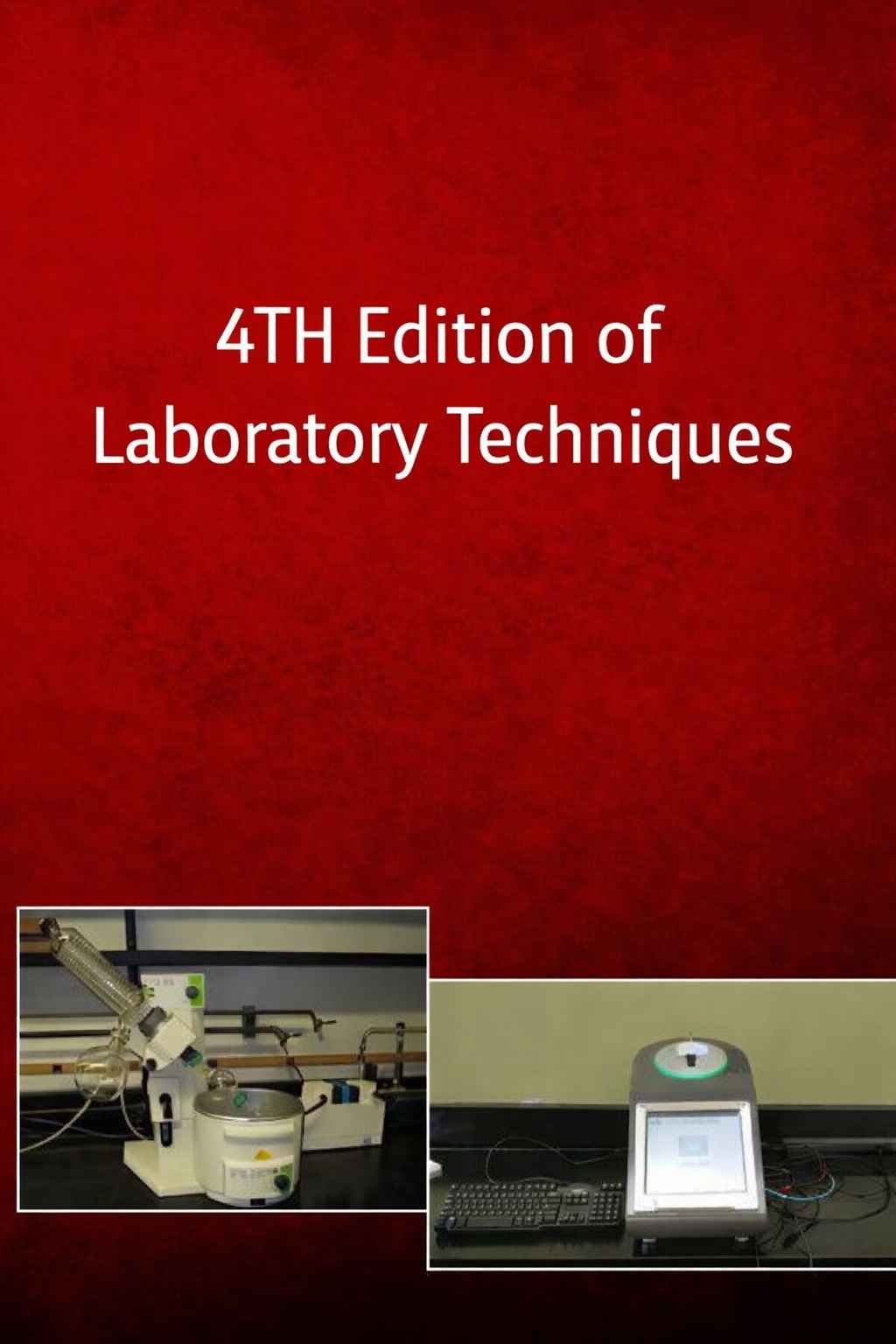
Is the 4th Edition Better Than the Last 3 Editions?
Yes, the 4th edition is better than the previous three editions.
It is more refined, more student-focused, and better aligned with modern organic chemistry laboratory teaching.
Why the 4th Edition Is Better
Clearer and More Student-Friendly Explanations
The fourth edition presents complex laboratory concepts in a simplified and well-structured manner. Topics are explained step by step, making them easier to grasp for students at different learning levels.
Concept-Driven Learning Approach
Instead of encouraging memorization of lab steps, this edition emphasizes why each technique is used. This approach helps students build a deeper understanding of the science behind every experiment.
Research-Style Experimental Design
Experiments are designed to reflect real research environments. Rather than following rigid instructions, students are encouraged to think, analyze outcomes, and draw logical conclusions like professional scientists.
Stronger Guided Inquiry and Critical Thinking
The improved layout promotes questioning, problem-solving, and decision-making during lab work. Students are guided to interpret results independently, enhancing analytical and reasoning skills.
Integration of Modern Laboratory Practices
This edition incorporates updated tools and techniques used in contemporary laboratories. It bridges the gap between traditional teaching labs and current scientific research standards.
Focus on Mechanisms, Safety, and Real-World Application
Greater attention is given to reaction mechanisms, laboratory safety, and practical relevance. This helps students understand how lab work connects to real-world chemistry and professional laboratory practices.
Overall, the 4th edition reflects years of teaching experience and educational reform, making it more effective than earlier versions.
6 Key Features of the 4th Edition
-
Step-by-step but thinking-based laboratory experiments.
-
Strong emphasis on why reactions happen, not just how.
-
Focus on purification, analysis, and interpretation of results.
-
Encourages independent problem-solving skills.
-
Includes experiments suitable for intermediate and advanced levels.
-
Designed to improve student learning outcomes, not rote work.
Names of the 3 Authors
The authors of the book are:
-
Jerry Mohrig
-
Gretchen Hofmeister
-
Christina Hammond
10 Main Features General Laboratory Techniques
1. Crystallization and Recrystallization
-
Used to purify solid compounds by forming clean crystals.
-
Requires a solvent where solubility changes clearly with temperature.
-
Slow cooling improves crystal quality.
-
Impurities remain dissolved while pure solid separates.
2. Solvent Selection Principles
-
Solubility increases with heat.
-
Polarity matters: similar polarity substances dissolve each other.
-
Solvent should not chemically damage the compound.
-
Safety is critical because most solvents are flammable.
-
Mixed solvents expand purification options.
3. Decolorization Technique
-
Removes colored impurities from organic solutions.
-
Activated charcoal absorbs unwanted colored substances.
-
Only a small amount is used to avoid product loss.
-
Hot filtration is done immediately after charcoal treatment.
4. Filtration Methods
-
Gravity filtration: used when solid is unwanted.
-
Vacuum filtration: used when collecting solid product.
-
Proper filter paper size ensures efficient separation.
-
Rinsing recovers maximum product without dilution.
5. Heating Techniques
-
Flames are avoided; electric heating is safer.
-
Hot plates and heating mantles provide controlled heating.
-
Steam baths prevent overheating of sensitive compounds.
-
Heating rate affects reaction accuracy and safety.
6. Melting Point Determination
-
Confirms compound identity and purity.
-
Pure substances melt in a narrow temperature range.
-
Impurities lower and broaden melting range.
-
Controlled slow heating gives accurate results.
7. Extraction Techniques
-
Transfers compounds between immiscible liquids.
-
Liquid-liquid extraction separates substances efficiently.
-
Multiple small extractions outperform one large extraction.
-
Separatory funnels enable safe layer separation.
8. Drying Organic Solutions
-
Removes water after extraction.
-
Anhydrous salts absorb moisture chemically.
-
Only minimal drying agent is added.
-
Overuse can reduce product yield.
9. Yield Calculation
-
Compares actual product to theoretical amount.
-
Indicates reaction efficiency.
-
Yield above 100% signals contamination or moisture.
10. Proper Labeling and Documentation
-
Samples must be clearly labeled with name, mass, date, and identity.
-
Spectra require identification and recording method.
-
Accurate labeling prevents data loss and grading errors.
Where Can You Buy the 4th Edition of Laboratory Techniques?
You can buy the 4th Edition of Laboratory Techniques online from international bookstores, most commonly:
-
Amazon (ships to Pakistan with import charges)
-
Other global academic book retailers that deliver internationally
Because this book is published outside Pakistan, it is usually imported, which is why shipping and customs charges apply.
Price in Pakistan (Approximate)
-
Discounted Price: PKR 38,188.33 (18% off)
-
Original List Price: PKR 46,732.15
-
Shipping & Import Charges: PKR 7,645.50
-
Delivery Cost (estimated): PKR 4,192.15
-
Estimated Delivery Time:
-
Standard: February 3 – 23
-
Fastest: February 3 – 17
-
Key Features of the 4th Edition
-
Focuses on microscale organic chemistry laboratory techniques.
-
Emphasizes conceptual understanding, not rote procedures.
-
Includes modern, research-style experiments.
-
Strong coverage of purification, extraction, filtration, and analysis.
-
Encourages guided inquiry and problem-solving.
-
Designed to improve student learning and lab safety.
-
Suitable for undergraduate organic chemistry laboratories.